
The Grave Could Not Hold the One Who Holds All Things
The Grave Could Not Hold the One Who Holds All Things
Resurrection Sunday and the Day Everything Changed Forever
Primary Texts: Matthew 28:1–10; Mark 16:1–8; Luke 24:1–12; John 20:1–18; Psalm 16:10; Hosea 6:2
Main Sayings: “He is not here, for He has risen, as He said.” “Why do you seek the living among the dead?” “Mary.” “Go to My brothers and say to them…” “Do not be afraid.”
The stone was rolled away.
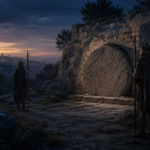
The tomb was empty.
Jesus was alive.
And nothing would ever be the same.
Resurrection Sunday is not an inspirational ending. It is God’s public verdict on Jesus. The One men rejected is alive. The One crucified in weakness now commands all people everywhere to respond.
Early in the morning, while darkness still lingered, the women went to the tomb. They came with spices, expecting to honor a dead body. Their question was practical and heavy: who would roll away the stone?
But when they arrived, the stone was already moved.
The tomb was open.
The body was gone.
An angel announced the words that changed history:
“He is not here, for He has risen, as He said.”
As He said.
Those words matter. Jesus had not been guessing. He had not been speaking in vague hope. He had told His disciples that He would be killed and rise on the third day. They did not understand. They could barely imagine it. But His word did not fail.
The Word that lay buried on Saturday was alive on Sunday.
Mary Magdalene ran to Peter and John. “They have taken the Lord out of the tomb,” she said, “and we do not know where they have laid Him.”
Peter and John ran. John reached the tomb first and looked in. Peter entered and saw the linen cloths lying there. The face cloth was folded separately. John saw and believed, though they still did not fully understand the Scripture that He must rise from the dead.
Then Mary stood outside the tomb weeping.
She saw angels, but grief still blinded her. She turned and saw Jesus, but did not recognize Him. She thought He was the gardener.
Then He said one word:
“Mary.”
That was enough.
The Shepherd called His sheep by name, and death’s illusion shattered before her eyes.
She cried out, “Rabboni!” Teacher.
The risen Jesus was not a ghost, not a memory, not a metaphor, not a spiritual feeling preserved by grieving disciples. He was Himself: crucified, risen, alive, and calling His people by name.
This is what the resurrection means.
The religious leaders called Him a blasphemer.
Rome treated Him as a failed king.
The crowds saw weakness.
The grave received His body.
But God raised Him from the dead.
The resurrection vindicates His identity, validates His sacrifice, confirms His promises, and announces His reign. Jesus is exactly who He claimed to be.
The Son of God.
The Messiah.
The Lord.
The Resurrection and the Life.
That is why Easter destroys neutrality.
You cannot reduce the empty tomb to inspiration. You cannot admire the resurrection from a safe distance. If Jesus is alive, then He is not merely part of your religious options. He is Lord over your life, your future, your sin, your death, and your hope.
The resurrection demands repentance.
It demands faith.
It demands worship.
It demands allegiance.
It demands witness.
The first command of Easter was not “sit privately with this feeling.” It was “go and tell.”
Mary was sent to the disciples. The women were sent with the announcement. The disciples would be sent to the nations. The risen Christ turns witnesses into messengers.
And the same question comes to you:
What will you do with the risen Lord?
Will you receive Him as Savior?
Will you follow Him as King?
Will you stop treating Him as an idea to consider and bow before Him as the living Christ?
Because the grave could not hold the One who holds all things.
Death could not silence Him.
The stone could not contain Him.
The guards could not prevent Him.
The world could reject Him, crucify Him, bury Him, and seal the tomb—but it could not keep Him dead.
So hear the announcement again:
He is not here.
He has risen.
As He said.
The King arrived. The Lord inspected. The Son spoke. The Lamb was valued and betrayed. The Servant gave Himself. The Substitute died. The Word waited in the grave.
And now the Living Lord stands outside the tomb, calling His own by name and sending them to the world.
Passion Week is not history to admire.
It is Jesus pressing the world for a verdict.
He is risen.
Now respond.
Key Verse
“He is not here, for He has risen, as He said.”
— Matthew 28:6
One Sentence to Remember
The One men rejected is alive, and the risen Lord now commands every heart to respond.
Discussion Question
If Jesus is truly alive and truly Lord, what changes in your life today?
A Prayer for the Day
Lord Jesus, You are alive. The tomb is empty. Death is defeated. I receive You as my risen Lord. I repent of my sin, trust Your finished work, and offer You my allegiance. Call me by name. Send me as Your witness. Teach me to live today in the power and hope of Your resurrection. Amen.

Roger Wamba Sador
Roger is a student of Christocentric Apologetics, a passionate Servant of God whose work for JesusAccordingToJesus.com focuses on Passion Week, prophetic fulfillment, and the climactic self-revelation of Jesus in His death and resurrection. His writing examines the final days of Jesus’ earthly ministry with careful attention to the Gospel narratives: the triumphal entry, the cleansing of the temple, the confrontations in Jerusalem, the Last Supper, Gethsemane, the trials, the cross, the burial, the empty tomb, and the resurrection appearances. He is especially interested in how these events reveal not only what happened to Jesus, but who Jesus understood Himself to be and what He came to accomplish. Roger brings an analytical and historically attentive approach to the biblical text, tracing the connection between Jesus’ words, His deliberate movement toward Jerusalem, and the prophetic pattern fulfilled in His suffering, death, and vindication. His work presses readers to see that Passion Week was not a tragic accident or a religious symbol added later, but the purposeful fulfillment of Jesus’ mission. Rather than treating prophecy as vague prediction or detached proof-texting, Roger explores how the Scriptures converge in the person and work of Christ. His writing helps readers see the cross and resurrection as the decisive center of the Gospel: the place where Jesus’ identity, mission, authority, obedience, sacrifice, and victory come fully into view. Roger writes for seekers, skeptics, believers, and serious students of Scripture who want to understand why the final week of Jesus’ life stands at the heart of the Christian proclamation: He died, He was buried, He rose again, and He is alive.