The King You Cannot Control
The King You Cannot Control
Palm Sunday and the King Who Refused Their Script
Primary Texts: Matthew 21:1–11; Mark 11:1–11; Luke 19:28–44; John 12:12–19; Zechariah 9:9; Psalm 118:25–26
Main Sayings: “The Lord needs them.” “I tell you, if these were silent, the very stones would cry out.” “Would that you, even you, had known on this day the things that make for peace!”
The crowd shouted “Hosanna.”
They meant it.
They wanted rescue.
They wanted Rome crushed. They wanted their nation restored. They wanted a King who would take their pain, their anger, their hopes, their expectations—and turn them into victory.
And Jesus knew it.
He received their praise.
But He refused their script.
He came as King.
Not as their mascot.
Not as their weapon.
Not as the servant of their agenda.
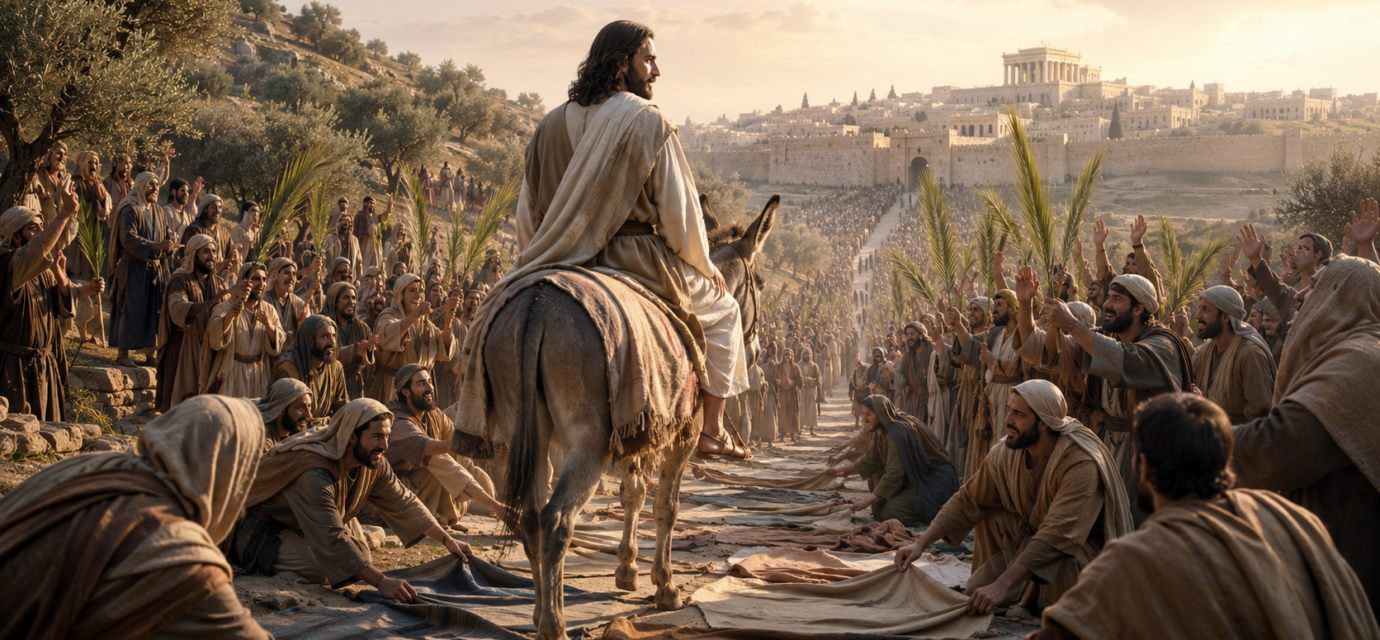
He rode into Jerusalem on a donkey, not a warhorse.
That was not weakness.
That was sovereignty.
The Crowd Wanted a Useful King
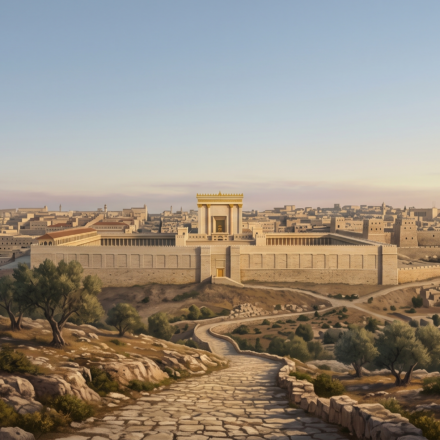
Jerusalem was swollen with Passover pilgrims.
The city was tense. Rome was watching. Soldiers stood nearby. The memory of deliverance from Egypt filled the air.
Then Jesus came.
The miracle worker.
The healer.
The One who fed thousands.
The One who raised Lazarus from the dead.
The crowd surged toward Him.
Cloaks hit the road. Palm branches waved. Voices rose:
“Hosanna! Blessed is He who comes in the name of the Lord!”
Hosanna means, “Save us now.”
But the crowd wanted salvation on their terms.
Jesus came to save them from something deeper than Rome.
He came to save them from sin.
They wanted a throne.
He was riding toward a cross.
The Donkey Preached the Kingdom
No warhorse.
No chariot.
No armor.
No military parade.
Just a donkey.
Jesus was fulfilling Zechariah:
“Behold, your King is coming to you, humble, and mounted on a donkey.”
The donkey announced the kind of King He is.
Humble.
Righteous.
Saving.
Uncontrollable.
His kingdom would not advance by fear, force, manipulation, or political domination.
It would advance through obedience.
Through sacrifice.
Through blood.
Through a King who lays down His life for His enemies.
The Stones Knew
Some Pharisees told Jesus to silence the crowd.
Jesus refused.
“I tell you, if these were silent, the very stones would cry out.”
That is not the language of a mere teacher embarrassed by praise.
Jesus did not reject worship.
He received it.
The stones knew what the city did not.
The King had come.
The Son of David had arrived.
The Lord was entering His city.
Creation was ready to testify, even if human mouths went silent.
The King Wept
Then Jesus saw Jerusalem.
And He wept.
Not because He had lost control.
Not because the cross surprised Him.
He wept because the city did not know the things that made for peace.
That is the terror of Palm Sunday.
People can sing the right words and still miss the King.
They can shout “Hosanna” and still resist surrender.
They can welcome Jesus publicly and reject Him personally.
The Question Palm Sunday Asks You
What kind of Jesus do you want?
A Jesus who fixes your problems?
A Jesus who blesses your plans?
A Jesus who advances your dreams?
A Jesus who stays useful, safe, and manageable?
That Jesus does not exist.
The real Jesus will not be used.
He will not be managed.
He will not be edited down to fit your expectations.
He does not come to join your team.
He comes to rule your life.
The Verdict
The crowd wanted deliverance without surrender.
We often want the same thing.
We want Jesus as Savior, but not King.
Comforter, but not Lord.
Helper, but not Master.
But Palm Sunday destroys that illusion.
You cannot receive His blessings and reject His rule.
You cannot shout “Hosanna” and refuse to follow.
You cannot crown Him with words while withholding your allegiance.
They wanted a King they could control.
They got a King they could not.
And that is mercy.
Because the King you cannot control is the only King you can finally trust.
He came lowly.
He came knowingly.
He came to die.
Not on your terms.
On His.
And He is not asking for your opinion.
He is asking for your allegiance.
Key Verse
“Behold, your King is coming to you, humble, and mounted on a donkey.”
— Matthew 21:5
One Sentence to Remember
Palm Sunday asks whether you want Jesus Himself, or only the version of Jesus that serves your expectations.
Discussion Question
Where have you tried to make Jesus useful instead of surrendering to Him as King?
A Prayer for the Day
Lord Jesus, I confess that I have often wanted a King I could control. I have wanted You to serve my plans, fix my problems, and bless my desires. Forgive me. Today I lay down my expectations. I receive You as You are. You are King. Rule over me, not on my terms, but on Yours. Amen.

Roger Wamba Sador
Roger is a student of Christocentric Apologetics, a passionate Servant of God whose work for JesusAccordingToJesus.com focuses on Passion Week, prophetic fulfillment, and the climactic self-revelation of Jesus in His death and resurrection. His writing examines the final days of Jesus’ earthly ministry with careful attention to the Gospel narratives: the triumphal entry, the cleansing of the temple, the confrontations in Jerusalem, the Last Supper, Gethsemane, the trials, the cross, the burial, the empty tomb, and the resurrection appearances. He is especially interested in how these events reveal not only what happened to Jesus, but who Jesus understood Himself to be and what He came to accomplish. Roger brings an analytical and historically attentive approach to the biblical text, tracing the connection between Jesus’ words, His deliberate movement toward Jerusalem, and the prophetic pattern fulfilled in His suffering, death, and vindication. His work presses readers to see that Passion Week was not a tragic accident or a religious symbol added later, but the purposeful fulfillment of Jesus’ mission. Rather than treating prophecy as vague prediction or detached proof-texting, Roger explores how the Scriptures converge in the person and work of Christ. His writing helps readers see the cross and resurrection as the decisive center of the Gospel: the place where Jesus’ identity, mission, authority, obedience, sacrifice, and victory come fully into view. Roger writes for seekers, skeptics, believers, and serious students of Scripture who want to understand why the final week of Jesus’ life stands at the heart of the Christian proclamation: He died, He was buried, He rose again, and He is alive.
Other Articles