

Barabbas: The Guilty Man Released While Jesus Took His Place
Primary Text: Matthew 27:15-26; Mark 15:6-15; Luke 23:18-25; John 18:39-40
Watch: Barabbas: The Guilty Man Released While Jesus Took His Place
Watch the companion video, then continue reading to examine the biblical testimony in its full context.
The Person Before the Encounter
Barabbas was imprisoned for rebellion and murder. He was not an innocent man trapped by misunderstanding. His guilt was public and serious.
Why the Encounter Happened
During the Passover custom, Pilate offered the crowd a choice between Barabbas and Jesus. Influenced by the leaders, the crowd demanded Barabbas and called for Jesus to be crucified.
What Jesus Saw That Others Missed
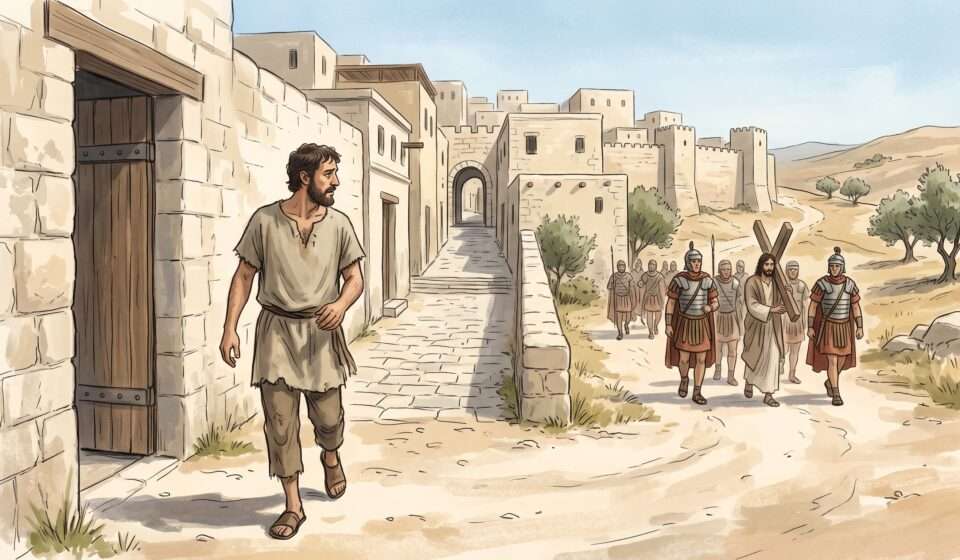
The Gospels record no conversation between Barabbas and Jesus. Yet their lives were joined through a stark exchange. The guilty man walked free while the innocent Christ was condemned.
Jesus saw the larger mission behind the injustice. He had said that the Son of Man came to give His life as a ransom for many. Barabbas became a visible picture of substitution.
What Jesus Said or Did
The release did not prove Barabbas was righteous. It proved that another person occupied the place of judgment.
We are not told how Barabbas responded. He may have disappeared into history unchanged. A person can receive the benefit of another's suffering without loving the one who suffered.
The Decision and Transformation
The encounter therefore contains both Gospel and warning. Christ takes the place of the guilty, but freedom must become a summons to follow Him.
The Passover setting deepened the meaning. Israel remembered liberation from bondage through the death of a substitute. Now a condemned man was released while Jesus moved toward the cross. The narrative does not need to say that Barabbas understood the symbolism for the exchange to confront the reader.
The Reader Before Jesus
Barabbas also represents the uncomfortable truth that salvation is not offered only to respectable failures. The man released was dangerous. Grace does not wait for guilt to become socially acceptable. At the same time, grace never declares violence harmless. It announces that even real guilt can be answered by the self-giving death of Christ.
Every sinner stands closer to Barabbas than pride admits. The question is not whether we are as publicly violent, but whether we need the innocent One to bear judgment we cannot escape by merit.
The crowd's choice also exposed the kind of deliverer many preferred. Barabbas represented violent revolt; Jesus represented a Kingdom advancing through truth, sacrifice, and the cross. Choosing Barabbas was not only choosing one prisoner. It was rejecting the kind of King Jesus claimed to be.
Follow Christ and Grow with Others
See yourself in the released prisoner, and see Jesus taking the condemned place.
Follow the Christ who gave Himself for the guilty. Join a worldwide family of forgiven people who do not boast over one another, but support, disciple, and help each other live as those whose freedom was purchased at the cross.