
When Jesus Comes Looking for Fruit
Monday and the Day Religious Performance Died
Primary Texts: Matthew 21:12–22; Mark 11:12–19; Luke 19:45–48; Isaiah 56:7; Jeremiah 7:11; John 15:1–8
Main Sayings: “May no fruit ever come from you again.” “My house shall be called a house of prayer, but you make it a den of robbers.” “Abide in Me, and I in you.” “Apart from Me you can do nothing.”
The fig tree had leaves.
But no fruit.
The temple had worship.
But no repentance.
Jesus judged the tree.
Jesus cleansed the temple.
Monday is the day religious performance died.
It is the day Jesus walks past appearance and asks the question no performance can survive:
Where is the fruit?
The Tree Looked Alive
Jesus was hungry.
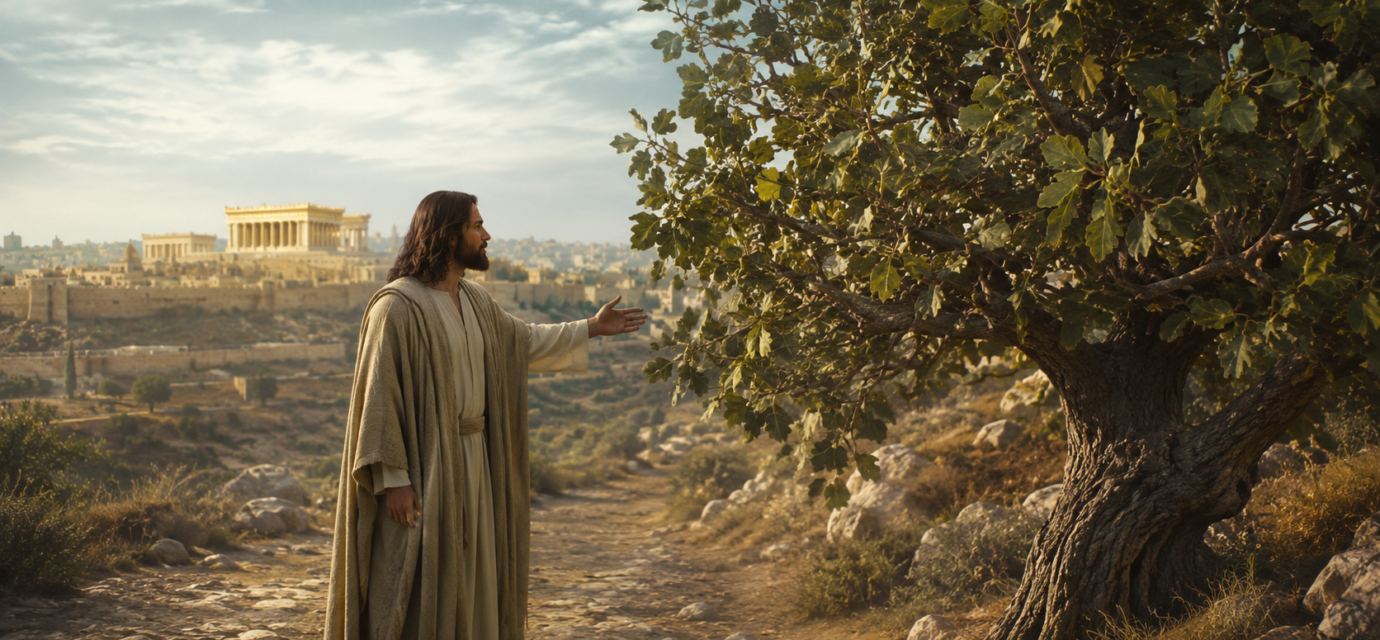
He saw a fig tree in leaf.
From a distance, it looked promising.
Green.
Full.
Alive.
But when Jesus came near, He found nothing.
Only leaves.
So He said:
“May no fruit ever come from you again.”
That sounds severe.
Because it is.
But it was not petty anger.
It was prophecy.
The tree was preaching before the temple ever came into view.
Leaves can advertise life.
Leaves can hide barrenness.
Leaves can make a tree look fruitful from the road.
But Jesus does not inspect from a distance.
He comes near.
And when He comes near, appearance is not enough.
The Temple Was Full of Leaves
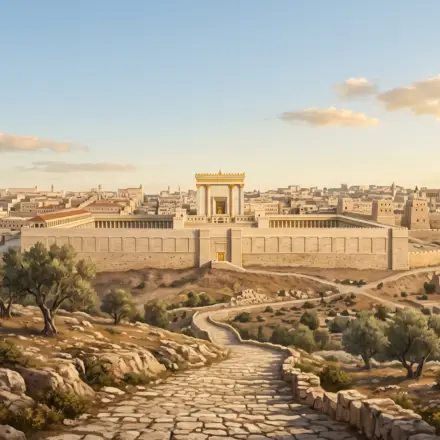
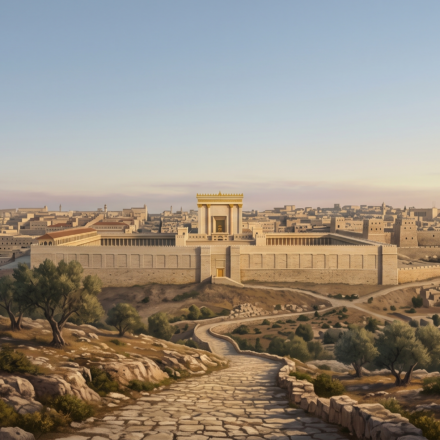
Then Jesus entered the temple.
The heart of Israel’s religious life.
The place of sacrifice.
The place of prayer.
The place where God’s name was honored.
But what did He find?
Noise.
Commerce.
Religious machinery.
Animals sold for sacrifice. Money exchanged. Tables operating. Systems moving.
Everything looked active.
Everything looked religious.
But Jesus saw the truth.
“My house shall be called a house of prayer, but you make it a den of robbers.”
The fig tree was the sign.
The temple was the target.
Leaves without fruit.
Worship without prayer.
Sacrifice without surrender.
Religion without the heart of God.
The Frightening Part of Monday
Jesus did not start Monday by confronting Rome.
He did not walk first into the palace.
He walked into the temple.
He did not begin with the openly irreligious.
He began with the religious center.
That should sober everyone.
The skeptic.
The seeker.
The believer.
The pastor.
The worshiper.
The lifelong church member.
Jesus is not impressed by sacred activity when the heart is untouched.
He is not fooled by spiritual language.
He is not distracted by religious motion.
He sees past the leaves.
Leaves Are Easy
Religious attendance can be leaves.
Holy Scriptures knowledge can be leaves.
Public worship can be leaves.
Religious language can be leaves.
A moral reputation can be leaves.
Even ministry can be leaves.
None of these are evil.
Leaves belong on a healthy tree.
But leaves are not fruit.
And Jesus does not come looking for the appearance of life.
He comes looking for life.
Fruit Is Harder
Fruit is repentance that actually turns from sin.
Fruit is love for God that reorders desire.
Fruit is mercy toward people who cannot repay you.
Fruit is forgiveness where bitterness once ruled.
Fruit is prayer that yields, not just prayer that asks.
Fruit is truth.
Humility.
Obedience.
Compassion.
Holiness.
Love.
Fruit is not decoration.
Fruit is evidence that life is actually flowing from the root.
The Mercy Hidden in the Warning
Monday is severe.
But it is not hopeless.
Jesus does not expose barrenness to humiliate the needy.
He exposes it to destroy the lie that performance can save.
The gospel is not that you must manufacture fruit so God will accept you.
The gospel is that Jesus is the true Vine.
He says:
“Abide in Me, and I in you.”
And again:
“Apart from Me you can do nothing.”
That sentence kills pride.
And it kills despair.
You cannot produce real fruit without Jesus.
But connected to Jesus, fruit is possible.
Real fruit.
Living fruit.
Fruit that God Himself produces.
The Verdict
Today, Jesus comes near.
He comes to the synagogue.
He comes to the temple.
He comes to the church.
He comes to the mosque.
He comes to the small group.
He comes to the public worship.
He comes to the private heart.
And He asks:
Where is the fruit?
Not the leaves.
Not the image.
Not the noise.
Not the performance.
The fruit.
Are you connected to Jesus?
Or are you only maintaining the appearance of spiritual life?
If all you have are leaves, do not hide from Him.
Come to Him.
Tell the truth.
Ask Him to cleanse what has become corrupted.
Ask Him to awaken what has become dead.
Ask Him to produce what you cannot produce on your own.
Monday is severe mercy.
Jesus kills the illusion so He can give life.
Key Verse
“He entered the temple and began to drive out those who sold.”
— Luke 19:45
One Sentence to Remember
Religious appearance is not enough; Jesus comes looking for fruit, not leaves.
Discussion Question
Where might Jesus find religious activity in your life without real spiritual fruit?
A Prayer for the Day
Lord Jesus, I confess that I have often produced leaves and called them fruit. I have relied on appearance, activity, and reputation while my heart has resisted You. Search me. Cleanse me. Connect me more deeply to You, the true Vine. Produce in me what I cannot produce on my own. Make my life real, fruitful, and pleasing to You. Amen.

Roger Wamba Sador
Roger is a student of Christocentric Apologetics, a passionate Servant of God whose work for JesusAccordingToJesus.com focuses on Passion Week, prophetic fulfillment, and the climactic self-revelation of Jesus in His death and resurrection. His writing examines the final days of Jesus’ earthly ministry with careful attention to the Gospel narratives: the triumphal entry, the cleansing of the temple, the confrontations in Jerusalem, the Last Supper, Gethsemane, the trials, the cross, the burial, the empty tomb, and the resurrection appearances. He is especially interested in how these events reveal not only what happened to Jesus, but who Jesus understood Himself to be and what He came to accomplish. Roger brings an analytical and historically attentive approach to the biblical text, tracing the connection between Jesus’ words, His deliberate movement toward Jerusalem, and the prophetic pattern fulfilled in His suffering, death, and vindication. His work presses readers to see that Passion Week was not a tragic accident or a religious symbol added later, but the purposeful fulfillment of Jesus’ mission. Rather than treating prophecy as vague prediction or detached proof-texting, Roger explores how the Scriptures converge in the person and work of Christ. His writing helps readers see the cross and resurrection as the decisive center of the Gospel: the place where Jesus’ identity, mission, authority, obedience, sacrifice, and victory come fully into view. Roger writes for seekers, skeptics, believers, and serious students of Scripture who want to understand why the final week of Jesus’ life stands at the heart of the Christian proclamation: He died, He was buried, He rose again, and He is alive.