

Setting His Face Toward Jerusalem

Primary Texts: Luke 9:51–62; Luke 10–19; Matthew 19–20; Mark 10
Main Sayings: “Follow me.” “No one who puts his hand to the plow and looks back is fit for the kingdom of God.” “The Son of Man came to seek and to save the lost.”
There comes a turn in the Gospel story.
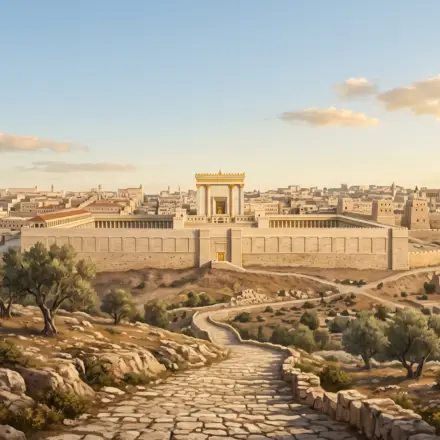
Luke says Jesus “set his face to go to Jerusalem.”
That sentence is quiet, but it is loaded.
Jesus knows where the road is going. He has already spoken of suffering, rejection, death, and resurrection. Now He moves toward the city where those words will become flesh.
And as He walks toward Jerusalem, He exposes every shallow version of discipleship.
Following Jesus Is Not Religious Interest
One man says, “I will follow you wherever you go.”
It sounds sincere.
Jesus answers:
“Foxes have holes, and birds of the air have nests, but the Son of Man has nowhere to lay his head.”
Jesus does not rush to collect followers with easy promises.
He does not sell comfort.
He does not hide the cost.
Many people want a faith that adds peace to an unchanged life. A blessing over ambition. A spiritual layer over self-rule. A holy name attached to the same old priorities.
Jesus confronts that.
To follow Him is not to admire Him from a safe distance. It is to walk behind Him on His road.
No Delay Above the Kingdom
Another man says he will follow Jesus, but first he must bury his father.
Jesus replies:
“Leave the dead to bury their own dead. But as for you, go and proclaim the kingdom of God.”
These words are hard.
They are not permission to despise family. Jesus honors the command to love and care rightly.
But He exposes something deeper: even sacred obligations can become a shield against obedience.
There is always a “first let me.”
First let me settle everything.
First let me secure my future.
First let me finish my plan.
First let me keep control.
Jesus does not accept the throne after everything else has been arranged.
The kingdom has priority because the King is present.
No Looking Back
Another says, “I will follow you, Lord, but let me first say farewell to those at my home.”
Jesus answers:
“No one who puts his hand to the plow and looks back is fit for the kingdom of God.”
This confronts divided allegiance.
Many people want Jesus, but not yet.
Jesus, but not fully.
Jesus, but not if He touches money.
Jesus, but not if He challenges identity.
Jesus, but not if He reorders family, career, desire, status, and reputation.
Jesus refuses to become a decorative figure inside a self-directed life.
He calls for a whole-person response.
The Lost Are Not Invisible to Jesus
Yet this road is not cold.
As Jesus moves toward Jerusalem, He tells stories of mercy.
A wounded man on the road is ignored by religious passersby but loved by a Samaritan.
A lost sheep is carried home.
A lost coin is found.
A lost son is received by his father.
A despised tax collector named Zacchaeus is seen, called, and changed.
Jesus says:
“The Son of Man came to seek and to save the lost.”
This is the warmth inside the warning.
Jesus demands everything, but not because He is cruel.
He demands everything because we are lost, and He came to save.
Every rival confidence tells us we are basically fine, or that we can repair ourselves, or that God can be approached on our terms, or that moral balance will somehow be enough.
Jesus says we are lost.
Then He says He came to seek and save the lost.
The Rich Man’s Sorrow
A rich ruler asks Jesus what he must do to inherit eternal life.
Jesus exposes the man’s heart by touching his treasure.
“Sell all that you have,” Jesus says, “and follow me.”
The man becomes sorrowful because he is very rich.
This is not only about money.
It is about the thing we cannot release.
The thing that quietly owns us.
The thing we trust more than Jesus.
Jesus looks at him and speaks with sober force:
“How difficult it is for those who have wealth to enter the kingdom of God!”
Wealth can become a savior that cannot save.
So can heritage, discipline, intellect, ritual, activism, success, spirituality, and reputation.
Anything can become the treasure that keeps us from following the King.
Why This Matters
Movement 7 shows Jesus on the road to Jerusalem.
He is not drifting toward death. He is moving with purpose.
On that road, He confronts delay, divided allegiance, false security, religious avoidance, and the illusion of self-rescue.
But He also reveals His mercy.
He seeks the lost.
He saves the lost.
He calls sinners by name.
So the question is no longer theoretical.
What are you still holding that keeps you from following Him?
Jesus is on the road to Jerusalem.
And He still says:
“Follow me.”
If Jesus’ words are pressing you toward response, you can begin here: https://logosmap.org/en/begin-here.

Waroal Peterson
Waroal Peterson is a staff writer for JesusAccordingToJesus.com, where he writes as a Christocentric apologist with a focused interest in the Gospel narratives and the progressive revelation of Jesus’ identity and mission. His work traces how Jesus reveals Himself through His own words, actions, conflicts, claims, compassion, suffering, death, and resurrection. Rather than beginning with religious labels or inherited assumptions, Waroal presses readers back into the text of the Gospels, asking what Jesus Himself says, shows, demands, promises, and fulfills. He is especially concerned with the unfolding logic of Jesus’ mission: the Son sent by the Father, the arrival of the kingdom, the call to repentance and faith, the authority to forgive sins, the necessity of the cross, and the vindication of the resurrection. His writing seeks to help readers see that the Gospel is not merely an idea to admire, but the announcement of who Jesus is and what He came to accomplish. Waroal writes for seekers, skeptics, new believers, and serious students of Scripture who want to encounter Jesus according to Jesus.








[…] ← Previous: Movement 7Next: Movement 9 → […]
[…] ← Previous: Movement 5Next: Movement 7 → […]