The King Comes to His Temple

Primary Texts: Matthew 21–22; Mark 11–12; Luke 19–20
Main Sayings: “The Lord needs them.” “My house shall be called a house of prayer.” “By what authority are you doing these things?” “Render to Caesar the things that are Caesar’s, and to God the things that are God’s.”
Jesus has set His face toward Jerusalem.
Now He enters the city.
This is not a private arrival. It is public, deliberate, and loaded with meaning.
He sends disciples to bring a colt and says:
“The Lord needs them.”
He rides into Jerusalem while the crowd cries, “Hosanna.”
They spread cloaks on the road. They welcome Him with royal language. They bless the coming kingdom.
Jesus does not stop them.
He receives the moment.
The King has come.
A King Who Does Not Fit the Crowd
The crowd wants deliverance.
That part is understandable.
Every people under pressure longs for rescue. Every oppressed heart wants justice. Every religious person wants God to vindicate the right side.
But Jesus does not enter Jerusalem like a warlord.
He rides in humility.
He comes as King, but not as a servant of the crowd’s agenda.
That confronts every attempt to use Jesus for our own cause.
Some want Him to bless their nation, tribe, movement, politics, ambition, or religious superiority.
Some want Him to defeat their enemies while leaving their own hearts untouched.
But Jesus does not come to be managed.
He comes to reign.
“My House Shall Be Called a House of Prayer”
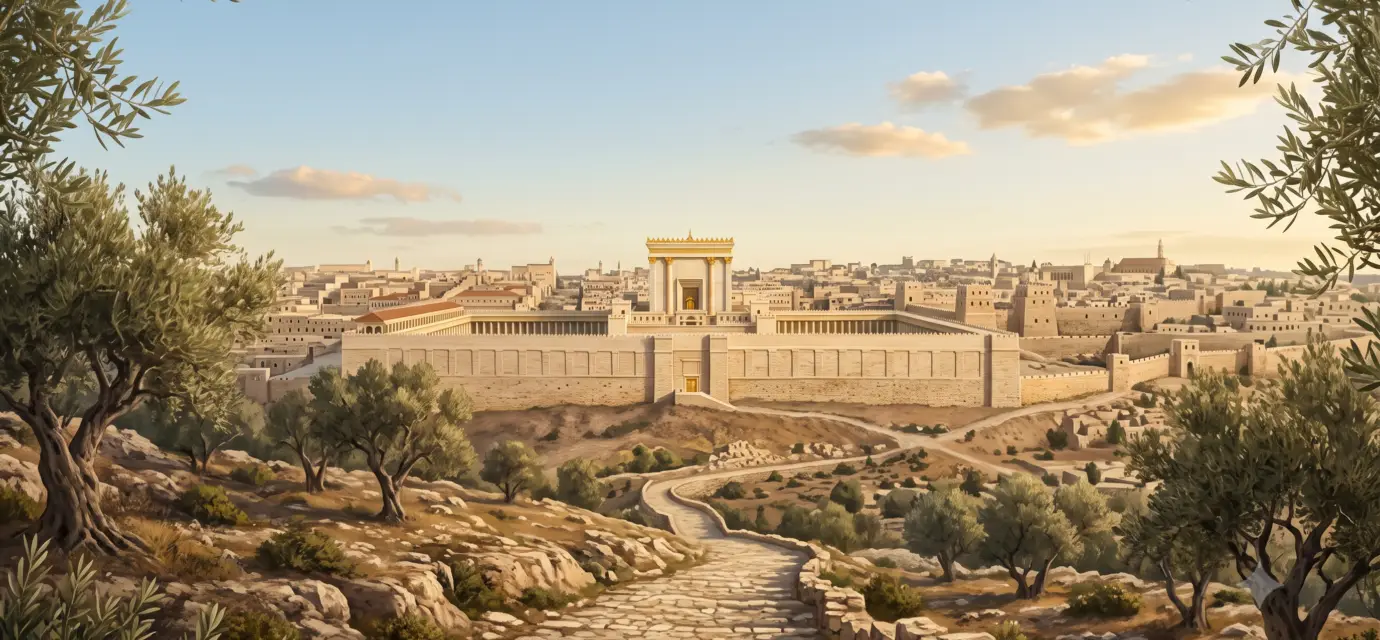
After entering the city, Jesus goes to the temple.
There He drives out those buying and selling. He overturns tables. He confronts the corruption of worship.
Then He says:
“My house shall be called a house of prayer, but you make it a den of robbers.”
This is not mild religious reform.
Jesus acts with authority in the place where God’s name, worship, sacrifice, and mercy were supposed to be honored.
He exposes a terrifying possibility: religion can stand near holy things and still resist God.
A temple can be full and yet fruitless.
A worship system can be active and yet corrupt.
A person can know religious language and still use God for profit, control, status, or self-protection.
Jesus does not flatter public religion.
He purifies it.
The Fig Tree and the Warning
Near this temple scene, Jesus curses a fig tree that has leaves but no fruit.
The action is strange until we see the point.
Leaves without fruit are a picture of appearance without reality.
That is the danger Jesus is exposing.
A life can look spiritual and still be barren.
A tradition can look ancient and still be empty.
A person can look moral and still be far from God.
A society can speak about values and still reject the King.
Jesus is not impressed by leaves.
He looks for fruit.
“By What Authority?”
The leaders challenge Him:
“By what authority are you doing these things?”
That is the right question.
If Jesus has no authority, then He is dangerous.
If He has authority, then everyone else is on trial.
Jesus answers in a way that exposes their dishonesty. They are not neutral seekers. They are protecting their control.
That still happens.
Many people ask religious questions not because they want truth, but because they want distance. They ask about authority because they do not want to surrender to it.
Jesus does not play that game.
Give to God What Is God’s
They try to trap Jesus with a political question about taxes.
Jesus asks whose image is on the coin. Caesar’s.
Then He says:
“Render to Caesar the things that are Caesar’s, and to God the things that are God’s.”
The answer is brilliant.
But it is more than clever.
If the coin bears Caesar’s image, what bears God’s image?
You do.
Human life belongs to God.
That means no government, tribe, ideology, ritual system, career, or private desire has final ownership over the human person.
Jesus will not let politics become ultimate.
He will not let religion become a mask.
He will not let Caesar own what belongs to God.
Why This Matters
Movement 8 shows Jesus as King in public conflict.
He enters Jerusalem deliberately.
He receives royal praise.
He confronts the temple.
He exposes fruitless religion.
He challenges dishonest authority games.
He refuses political traps.
And He reminds every hearer that what bears God’s image belongs to God.
This is not a Jesus who can be safely admired and ignored.
He confronts the city. He confronts the temple. He confronts public power. He confronts the heart.
The King has come to His temple.
The question is whether we will receive Him as King, or merely wave branches while keeping control.
If you are ready to look more directly at who this King is, start here: https://logosmap.org/en/meet-the-logos.

Waroal Peterson
Waroal Peterson is a staff writer for JesusAccordingToJesus.com, where he writes as a Christocentric apologist with a focused interest in the Gospel narratives and the progressive revelation of Jesus’ identity and mission. His work traces how Jesus reveals Himself through His own words, actions, conflicts, claims, compassion, suffering, death, and resurrection. Rather than beginning with religious labels or inherited assumptions, Waroal presses readers back into the text of the Gospels, asking what Jesus Himself says, shows, demands, promises, and fulfills. He is especially concerned with the unfolding logic of Jesus’ mission: the Son sent by the Father, the arrival of the kingdom, the call to repentance and faith, the authority to forgive sins, the necessity of the cross, and the vindication of the resurrection. His writing seeks to help readers see that the Gospel is not merely an idea to admire, but the announcement of who Jesus is and what He came to accomplish. Waroal writes for seekers, skeptics, new believers, and serious students of Scripture who want to encounter Jesus according to Jesus.
Other Articles







[…] ← Previous: Movement 8Next: Movement 10 → […]
[…] ← Previous: Movement 6Next: Movement 8 → […]
[…] Movement 8 of 12 · Coming in this journey The King Comes to His Temple Matthew 21–22; Mark 11–… […]
[…] Movement 8 of 12 · Already covered The King Comes to His Temple Matthew 21–22; Mark 11–12; Luk… […]